1- Initial ideas and concept development
The initial stage of concept development focused on establishing a clear tone of voice and visual direction for the campaign. Working collaboratively with the marketing group, we identified three key attributes that would define the campaign being nostalgia, excitement, and authenticity. These qualities were chosen to reflect both the emotional connection fans have with past World Cup moments and the energy that surrounds the tournament itself. Establishing this tone early on helped guide all creative decisions moving forward.
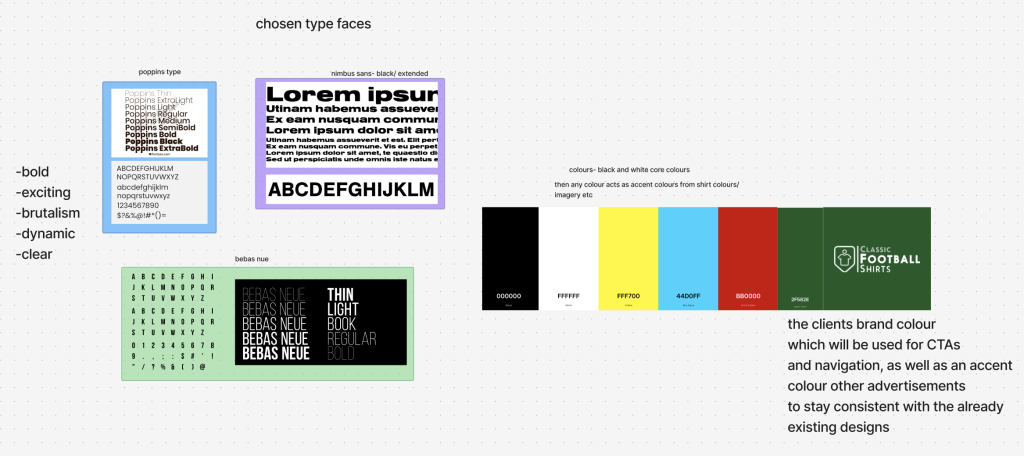
Visually, this direction would be supported through the use of bold, large scale typography to create impact and draw attention, particularly in digital and promotional contexts. Alongside this, we decided to use classic imagery of iconic World Cup moments, focusing on well known and celebrated players to reinforce the sense of legacy and recognition. In terms of colour, we decided on a predominantly black and white base, which acts as a neutral foundation. This allows the colours from the football shirts and player imagery to stand out more vividly, ensuring that the products themselves remain the focal point.
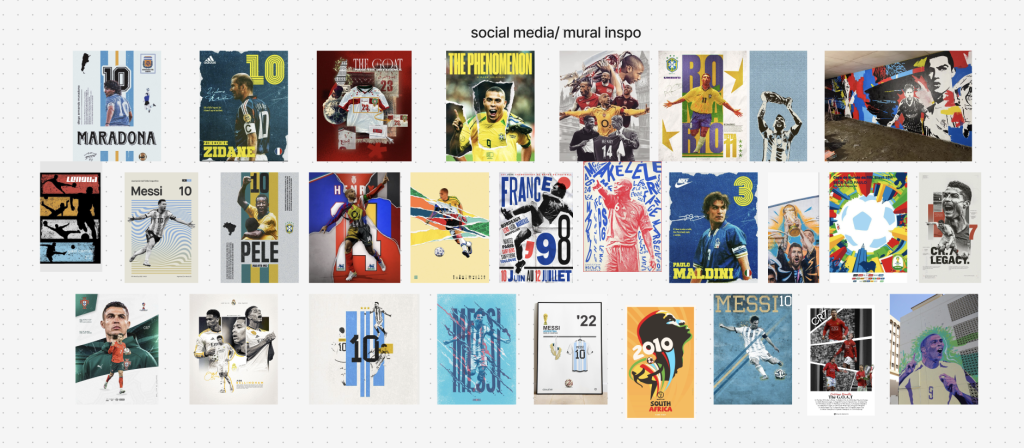
From these ideas, and the use of the marketing groups site map, the campaign title “World Cup Legends” was developed. This concept serves as the classic aspect of the campaign, celebrating the history of the world cup while highlighting legendary players and their iconic shirts. To help visualise this direction, I created a moodboard featuring poster and mural style designs that combine dynamic layouts, strong typography, and impactful imagery.
The marketing group also contributed to the art direction by suggesting key players to feature, including Messi, Ronaldo (both Brazil and Portugal), Maradona, and Pelé etc. This input helped refine the concept further, ensuring that the campaign would resonate with a wide audience by focusing on globally recognised football icons.
2- The Big Idea (collaborative brief) Feedback
Workshops with the client and collaboration with the marketing group played a significant role in developing and refining my concept. Throughout the brief, these sessions provided valuable opportunities to present early ideas and receive direct feedback from the client, Ash and Alec. Being able to discuss my designs with them helped to validate and strengthen the “World Cup Legends” concept, giving me confidence that the direction aligned with the brand and the campaign goals.
These workshops also created an environment where I could share my work with the wider group and gain different perspectives. Although difficult at times, feedback from the marketing students was useful, as they approached the project from a strategic and audience focused viewpoint. This highlighted considerations that I may not have initially prioritised as a designer, reinforcing the importance of collaboration when working in a professional context.
In addition to this, regular feedback during my graphic design lectures further supported the development of my work. Each week, I presented progress to both tutors and peers, receiving constructive critiques that helped shape my decisions. This was especially valuable during the early stages of the project, where I was still exploring different directions. I experimented with typography styles, colour, and the selection of players to feature, using feedback to refine and narrow down the most effective approach.
As the project progressed, I produced multiple iterations of social media posts, mural concepts, and other campaign outputs. The consistent feedback I received helped bring these elements together into a more unified and cohesive design system. In particular, it guided me towards using darker backgrounds combined with the vibrant colours of the shirts, ensuring strong visual contrast and maintaining focus on the products. Overall, this iterative process of feedback was essential in strengthening both the concept and its execution.
3- Reflection and Further Development
As the project progressed, I produced multiple iterations of social media posts, mural concepts, and other campaign outputs. The consistent feedback I received helped bring these elements together into a more unified and cohesive design system. In particular, it guided me towards using darker backgrounds combined with the vibrant colours of the shirts, ensuring strong visual contrast and maintaining focus on the products. Overall, this iterative process of feedback was essential in strengthening both the concept and its execution.
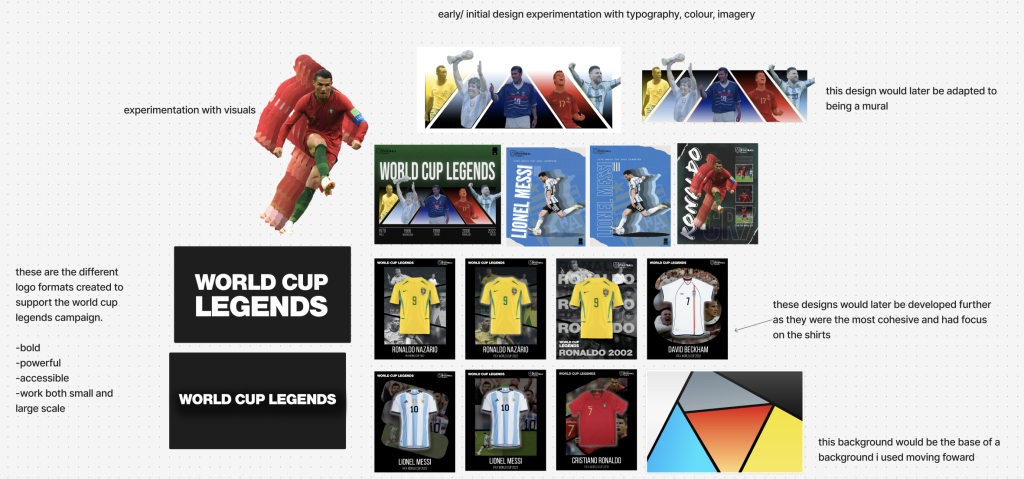
As these ideas developed, they gradually became more refined and cohesive, aligning more closely with the Classic Football Shirts brand and the formats I was designing for, including social media and web layouts. To create these designs, I used a combination of software including Illustrator, Photoshop, Adobe Express, and Figma. Each platform supported a different part of the process, from image editing and composition to layout design and prototyping.
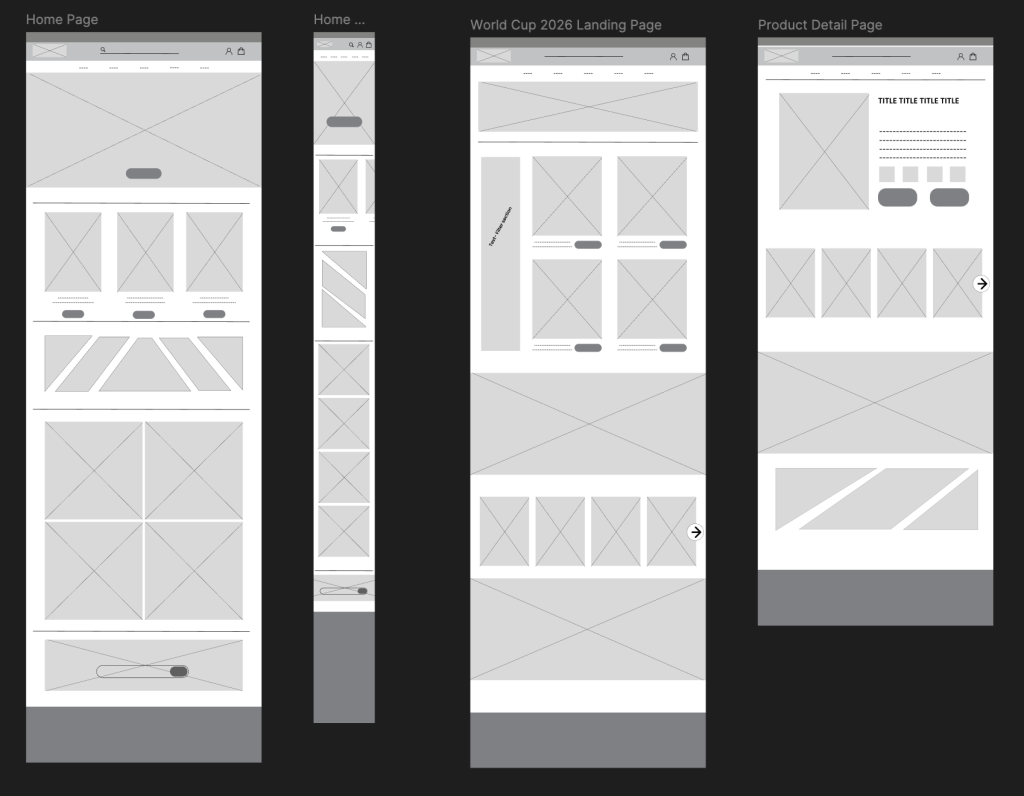
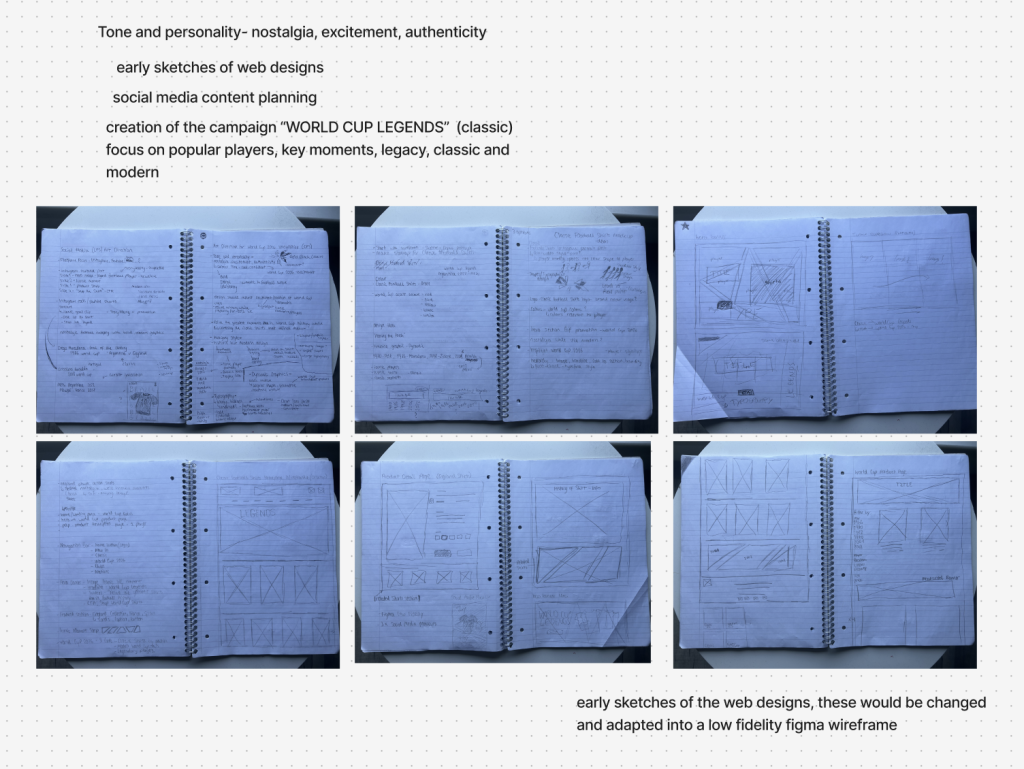
My low fidelity web and mobile designs were created in Figma, based on my initial sketches and informed by both my own site map and the version provided by the marketing group. The aim here was to establish a clear, accessible structure that effectively integrated the “World Cup Legends” campaign into the website. The low fidelity was experimental with dynamic image layouts which would later be scrapped due to it not fitting with my design ideas moving foward.
At this point in the project, I felt that much of the decision making became more independent. While the marketing group contributed initial ideas, these were often quite broad, meaning I took on the responsibility of shaping the visual direction myself. However, ongoing feedback from lectures remained important, helping me refine and strengthen my designs as they progressed.
Figma/ Figjam Board