Collaboration plays a significant role in design practice, particularly as creative and marketing teams increasingly work together to deliver cohesive brand experiences. I researched a large global agency like Moving Brands and a smaller independent studio such as Universal Everything, when comparing them it becomes clear that while both rely on collaboration, the way teams are structured and operate is quite different.
Moving Brands
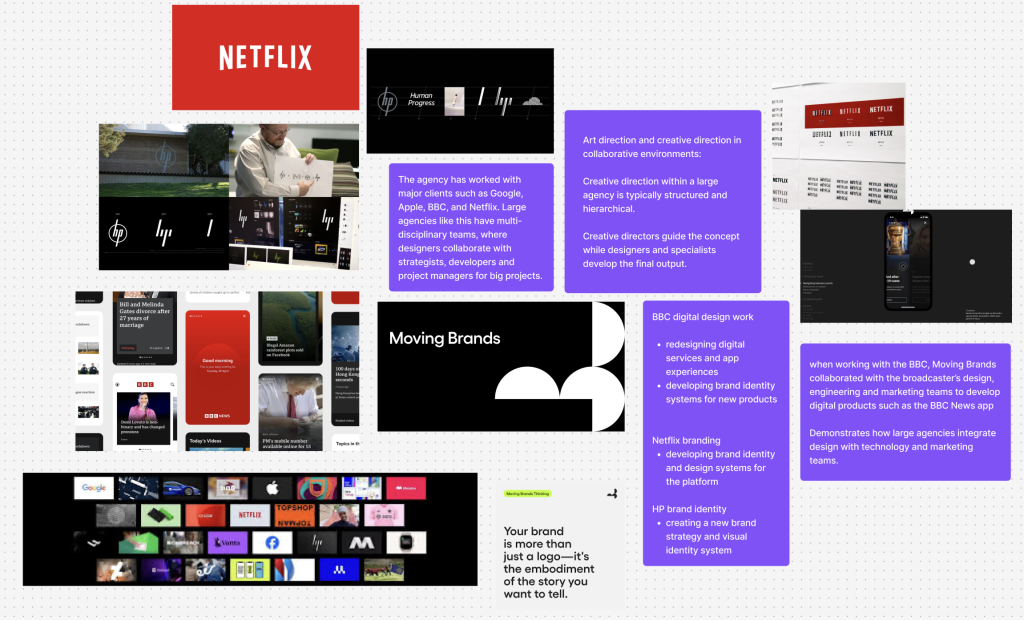
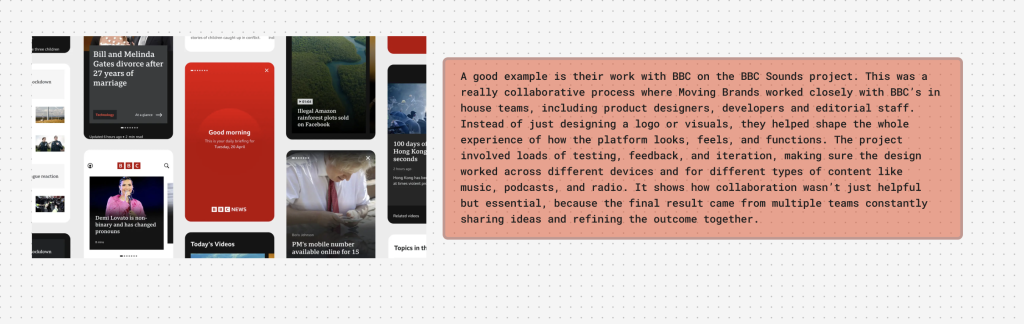
Large agencies like Moving Brands have a structured, in house model. Teams are made up of specialists including creative directors, brand strategists, UX designers, motion designers, and project managers. This hierarchy allows for clear roles and responsibilities, ensuring that projects can be delivered efficiently. Collaboration in this environment is often highly organised, with defined stages such as research, concept development, design and delivery. Marketing teams play a crucial role within this structure, working closely with designers to put together creative output with audience insights, brand positioning and campaign objectives. For example, due to having a larger budget for projects, Moving Brands’s work with global clients such as Google and the BBC demonstrate how design, technology and marketing must align to create cohesive digital products and brand systems.
Universal Everything
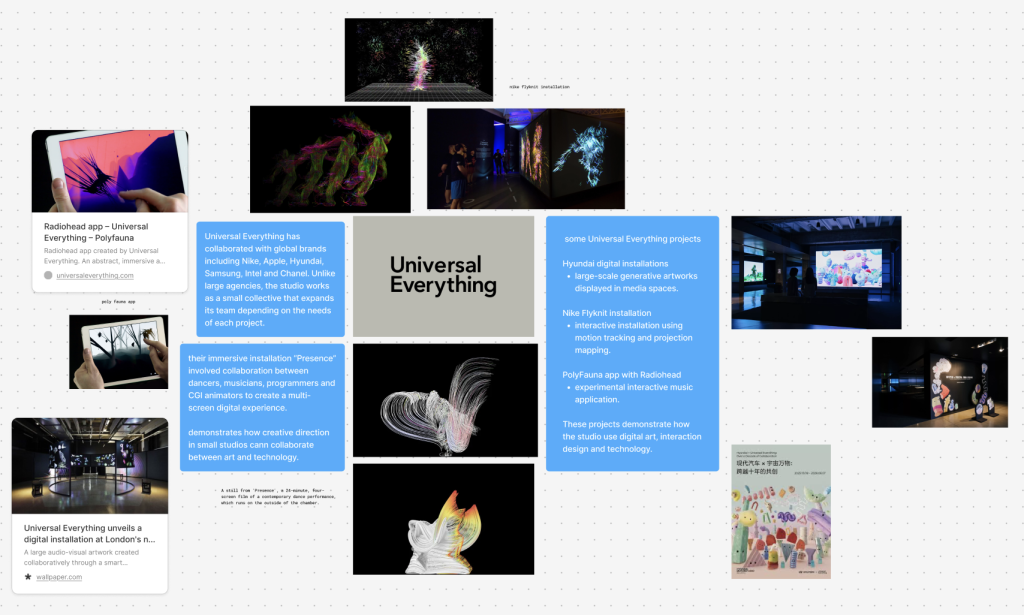
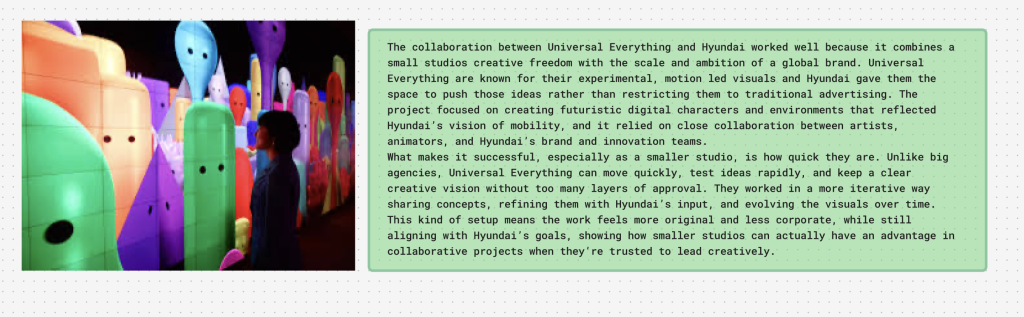
In contrast, Universal Everything operates as a small independent studio with a much more flexible and fluid model of practice. Rather than maintaining a large in house team, the studio consists of a small core group that collaborates with external creatives such as programmers, animators and musicians depending on the project. This creates a more experimental approach, where individuals often take on multiple roles within a project. Collaboration here is less about a structure and more about creative exchange, allowing for innovation across art, technology and design. Projects such as their installations for Hyundai or Nike highlight how creative direction can go beyond traditional design into immersive and interactive experiences.
The difference between in house teams and independent studio models is in how collaboration is managed. In large agencies, collaboration is driven by project managers and structured workflows, ensuring consistency and efficiency across large teams. In smaller studios, collaboration is more natural, with creative direction often led directly by the founder or a small leadership team. At Universal Everything, creative director Matt Pyke plays a central role in creating the artistic vision, working closely with collaborators to bring ideas to life.
Art direction and creative direction function differently across these environments. In large agencies, creative direction is often shared across multiple leaders and must align with client goals, marketing strategies and business objectives. This ensures that the final outcome is both visually and commercially effective. In smaller studios, creative direction tends to have a stronger emphasis on experimentation and artistic expression.
Overall, collaboration in design can have different structures and levels of creative freedom and it’s important how effectively teams combine their skills, perspectives and processes. These insights are relevant when considering my own group project with marketing students for the Classic Football Shirts World Cup integration. Whether structured like a large agency or free like an independent studio, successful collaboration depends on clear communication, shared vision and the ability to balance creativity with strategic thinking which will be important when I take on the role of an art director visualising and designing the campaign our marketing group come up with.
FigJam Board