Who are they and what do they do?
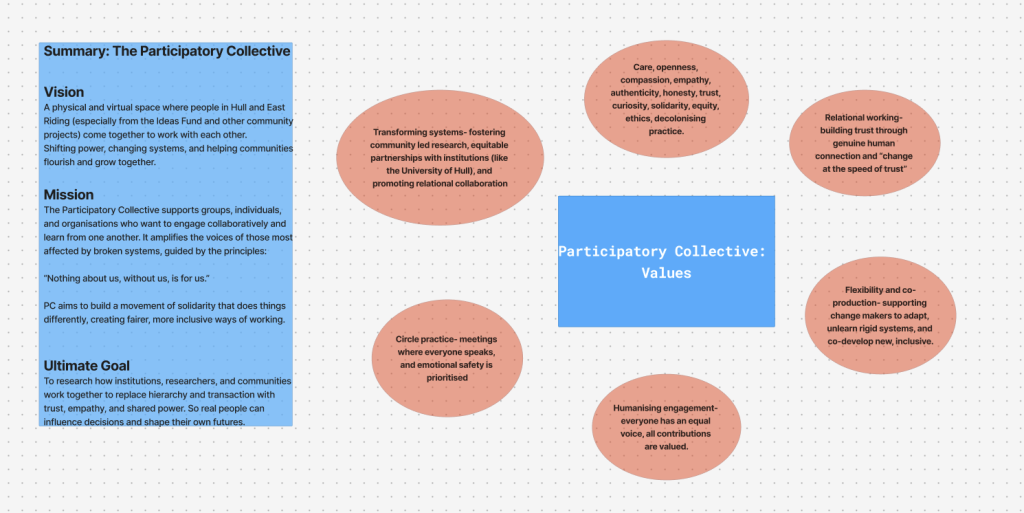
The Participatory Collective is a developing network of community groups, change makers, and individuals across Hull and East Riding who share a belief in working with people, not for them. It brings together those involved with The Ideas Fund and other projects, creating a supportive physical and digital space for collaboration, reflection, and action.
Rather than facing situations alone, the Participatory Collective promotes participatory working, which is a process where everyone’s voice is valued, and decisions are made collectively. They exist to shift power, change systems, and amplify the voices of people who have direct lived experience with the social challenges Hull faces. The collective believes that by connecting people who understand these systems best, communities can create fairer and more effective ways of supporting one another together.
How do they do it?
The Participatory Collective works through what they call relational practice. This means taking time to build trust, listening deeply, and understanding people as humans before roles or titles. In their meetings, they often use circle practice, where everyone has equal space to speak and share. They follow the guiding principle of the Poverty Truth Commissions “Nothing about us, without us, is for us.”
Through workshops, events, and shared online platforms, they create spaces where ideas can emerge naturally, rather than being forced into systems. Their approach focuses on care, empathy, openness, and co-production, allowing change to happen “at the speed of trust” (Stephen Covey).
Why are they important?
In many communities, people often feel unheard by the systems that are supposed to support them. The Participatory Collective gives these individuals a platform to be co-designers of change rather than passive recipients of services. This is especially vital in Hull, a city with strong community spirit but ongoing challenges around poverty, health inequality, and access to opportunity. By supporting collaboration between local groups, universities, and institutions, the Collective helps ensure that change happens with communities, not imposed on them.
Their work also encourages the “flipped university” model, a new way of doing research where communities help lead the direction of academic projects, rather than simply being studied by them.
What challenges do they face?
Because the Participatory Collective is still growing, its main challenges involve visibility, communication, and coordination. Many people in Hull are already doing great community work, but they may not know how to connect or share learning. There’s also a challenge of representation, making sure that the website and brand truly reflect the diversity of the people involved, without excluding anyone.
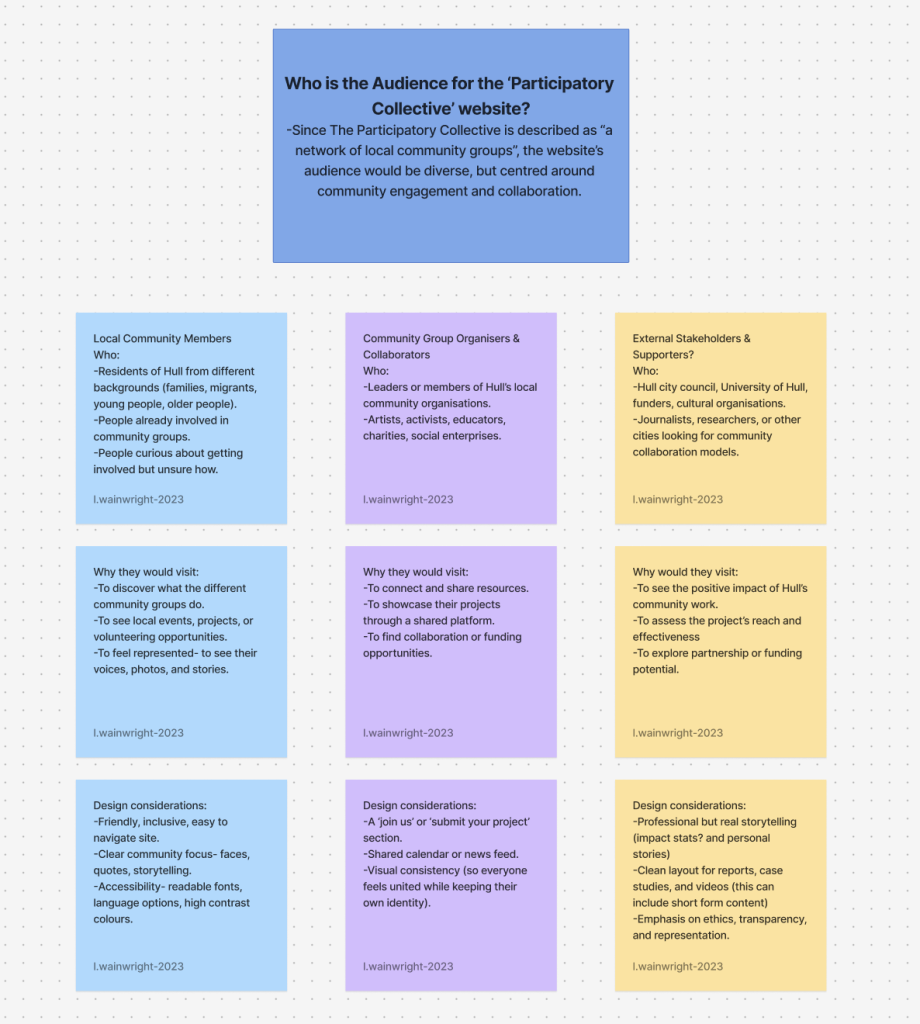
Another issue is ensuring accessibility, both online and offline. The Participatory Collective must reach each stakeholder (community groups, funders, academics, policy makers), and people with varying levels of digital confidence, disabilities, or language barriers, so inclusive design is vital.
What do they need from us as designers?
The Collective needs a brand and website that:
-Feels open, warm, and trustworthy, reflecting its core values of care and inclusion.
-Uses accessible colours and typography, ensuring clarity for all users.
-Tells human stories through real imagery, quotes, and personal voices.
-Offers simple navigation and clear structure so anyone can find information quickly.
-Encourages collaboration through a “join us” or “share your story” section.
-Extends easily across media, such as posters and social media posts.
-Responsive design that adapts well with different devices.
A strong digital presence will help them connect with a wider audience, from local residents and volunteers to universities, funders, and other collectives around the UK.
Who is the audience?
How should it make people feel?
The Participatory Collective’s visual identity and tone should evoke kindness, empathy, and empowerment. It should be ethical, visitors to their site should feel welcomed, included, and inspired to take part. The goal is to communicate that everyone has something valuable to contribute.